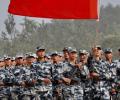
The Chinese action followed 'India's recent, illegal construction of defence facilities across the border into Chinese territory in the Galwan Valley region', a write-up in the state-run Global Times tabloid said, quoting unnamed military sources.

China does not have to give up what it took in 2020, it will never give up its claim to Arunachal Pradesh, Ladakh and other areas, and it has all the time now to plan its next surprise, points out Lieutenant General Prakash Katoch (retd).

Jaishankar also said that there is a need to take the disengagement process forward.
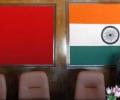
India and China have agreed to take measures to further ease the situation at the borders while continuing to implement the October agreement to resolve the standoff in eastern Ladakh comprehensively. The two sides held the 32nd meeting of the Working Mechanism for Consultation & Coordination on China-India Border Affairs (WMCC) in New Delhi, agreeing to maintain communication through diplomatic and military channels and safeguard sustainable peace and stability in the border areas. This meeting follows the October 21 agreement between the two countries to resolve the over four-year-long military standoff in eastern Ladakh.
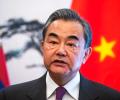
Addressing a symposium on the international situation and China's foreign relations in 2022, Wang said both countries have maintained communication through diplomatic and military-to-military channels.

India and China have implemented a pact on patrolling in Depsang and Demchok along the Line of Actual Control (LAC) in eastern Ladakh, as per agreed modalities and timelines. The agreement was reached on October 21 and includes provisions for disengagement and patrolling in the last two friction points in the region. The pact has been effected and implemented as agreed, with both sides resuming patrolling activities and grazing, where applicable, as per longstanding practice before the friction began. The terms of the disengagement agreements reached prior to the latest pact continue to hold in relevant areas in eastern Ladakh. The agreement applies mutually to both sides and is without prejudice to India's positions on the LAC or boundary lines. India and China are each carrying out one round of patrolling in Depsang and Demchok, but they have maintained their deployment of troops along the LAC. The focus now is on de-escalation of the overall situation. The agreement was endorsed by Prime Minister Narendra Modi and Chinese President Xi Jinping in a meeting in Kazan, Russia, signaling attempts to normalize ties.

Asked about the recent meeting between Modi and Xi, and if Russia had any role in it, Alipov said, "We have not played any role in it, but we are happy that it took place in Kazan... We wholeheartedly welcome the meeting."

China claims Arunachal Pradesh as part of southern Tibet and routinely protests visits by Indian leaders, foreign officials as well as the Dalai Lama to the area.

Disengagement from the LAC will remain a chimera because China has given enough indications that the PLA will not move back any more. China has even deployed drones to monitor and deny any patrolling by Indian troops even in the buffer zones which are all in Indian Territory, explains Lieutenant General Prakash Katoch (retd).
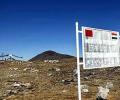
The move was aimed at 'reaffirming China's claim over the state'. China claims the state as 'South Tibet'.

The meeting will take place in Chushul sector on the Indian side of Line of Actual Control.

China has sharply reacted to India's plans to construct a road network along the McMohan line in Arunachal Pradesh and expressed hope that India will not take any action which may complicate the situation before a final settlement is reached to end the boundary dispute.

A controversy was kicked up on Thursday with China's state-owned television CCTV showing India's map without Jammu and Kashmir and Arunachal Pradesh while reporting on Prime Minister Narendra Modi's visit.
'Had Haji Pir and/or Skardu been taken, the message would have gone out not just to General Asim Munir and his cohort in the Pakistan army but to the Pakistani people that every terrorist incident in India would lead to substantial loss of territory in PoK.'

China has welcomed Modi remarks on border, and has said it has a 'positive attitude'.

'The whole of Ladakh knows that China has usurped our land'

'In Eastern Ladakh the Chinese attempted salami slicing.' 'Our response has been superb. Our military has responded magnificently.'

China also hinted that India was objecting to its efforts to build the road in Donglang area of the Sikkim sector on behalf of Bhutan.

Amid the Sikkim standoff, National Security Advisor Ajit Doval on Thursday held talks with his Chinese Counterpart and State Councillor Yang Jiechi on the sidelines of the BRICS NSAs meeting.

Besides the border question, India and China discussed issues related to counterterrorism including Beijing's blocking of India's bid in the United Nations to ban Pakistan-based JeM chief Masood Azhar, National Security Advisor Ajit Doval said on Thursday.

At a media briefing in Beijing, Chinese Foreign Ministry spokesman Wang Wenbin said the two sides have maintained smooth communication on border-related issues through diplomatic and military channels.

On the eve of Foreign Ministerial talks, India on Wednesday virtually rejected China's claim over a small part of Sikkim, saying the state's boundary issue has been settled. Foreign Secretary Shivshankar Menon said the recent Chinese claim over the 'finger area' in Sikkim border would be discussed at the talks between External Affairs Minister Pranab Mukherjee and his Chinese counterpart Yang Jiechi in Beijing on Thursday. China recently laid claim over the 'finger area'.

'The Chinese mindset and approach to India is far different from that in Pakistan.' 'This reality makes it possible for us to follow an engagement policy with one, while militating against engagement with the other.'
'Our strategy should be to 'hold the line' in the north on the Sino-Indian land frontier, but maintain and, if possible, enlarge India's current edge in the maritime south.'
Instead of "the dragon and the elephant compete with each other", "the dragon and the elephant dance together, Chinese Foreign Minister Wang Yi said.

Prime Minister Manmohan Singh on Sunday left for a five-day visit to Russia and China.

'Does the Indian army's new assertiveness risk a clash escalating into shooting and possibly skirmishes?' asks Ajai Shukla.

Under the India-China agreement on the disengagement process in eastern Ladakh, the Chinese army will pull back its troops to east of Finger 8 areas in the northern bank of Pangong lake, Defence Minister Rajnath Singh said in Parliament on Thursday, in what is seen as a significant step to dial down tensions in the key face-off site.

We strongly urge India to take practical steps to correct its mistake, Wu said.
The 16th round of India-China border talks will be held in Beijing on June 28 followed by the visit of Defence Minister A K Antony a week later as the two countries are set to resume top level contacts to build on the recent visit of Chinese Premier Li Keqiang to New Delhi.
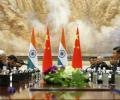
Prime Minister Narendra Modi began a three-day visit to China from this north west city on Thursday, the hometown of Chinese President Xi Jinping with whom he held "very substantive" discussions focussing on strengthening of mutual trust and the boundary issue.

Joshi's reaction came after Gandhi termed as "very serious" the issue of China releasing a "standard map" that laid claim over Arunachal Pradesh and Aksai Chin, and claimed the neighbouring country has already taken India's land in Ladakh and Prime Minister Narendra Modi should speak on the issue.
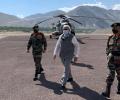
As the China factor enters the body politic of India with greater potency, its consequences will certainly be far-reaching, note Harsh V Pant and Vinay Kaura.

Doval's visit was 'part of regular high-level engagements between India and China', an Indian Embassy press release in Beijing said.
Making a strong pitch for deepening ties with India after the leadership changes in Beijing, China on Monday said that Sino-Indian ties should not be affected by 'noise' by 'some parties' intended to undermine bilateral ties which had improved despite the lingering border dispute.

External Affairs Minister S Jaishankar on Tuesday took a strong stance on the Indo-China border issue by saying that any unilateral attempt to change the Line of Actual Control (LAC) will not be 'countenanced' by India.
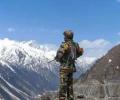
Asserting that sovereignty and territorial integrity of China are "sacred and inviolable", the country's national legislature has adopted a new law on the protection and exploitation of the land border areas, which could have bearing on Beijing's border dispute with India.

China on Tuesday maintained that its decision to block the bid to get Jaish-e-Mohammed chief Masood Azhar banned by the United Nations was in accordance with "facts and relevant resolutions"

The stand by China spelt out by its foreign ministry insisting that it takes the 1959 line on perception of the LAC amid a nearly five-month-long border standoff in eastern Ladakh triggered a strong reaction from India.
